

Understanding Your Dental Care
Your tooth feels fine. So why does your dentist recommend a filling?

✓ Yes—a tooth can need a filling without pain.
However, not every early sign of decay needs a filling. Your dentist checks the tooth to decide whether preventive care, monitoring, or a repair makes sense.
You’re at a routine dental visit, and your dentist recommends a filling. Your first thought might be: “But that tooth feels completely fine.”
It’s a fair question. After all, you can chew comfortably and haven’t noticed any sensitivity. So it helps to understand what your dentist sees and why they recommend treatment.
At Advanced Dental Care in Costa Mesa, we welcome these questions. We want you to understand your options and feel comfortable with your next step.
Why can a cavity develop without pain?
Early tooth decay often causes no symptoms. As a result, a tooth can feel normal even when decay has started.
During an exam, your dentist checks your teeth for signs of decay. When appropriate, dental X-rays also help your dentist find problems that you may not notice at home.
As decay advances, you may develop sensitivity or a toothache. However, waiting for pain is not a reliable way to decide when a tooth needs care.
Does every sign of decay need a filling?
No. Early mineral loss and a cavity that has formed a hole are different stages of decay. Therefore, they may need different types of care.
✓ Before a hole forms
Fluoride and preventive care can help stop or reverse some early decay.
✓ Once a cavity forms
Your dentist may recommend a filling to remove the decayed tissue and repair the tooth.
Your dentist can explain which stage applies to your tooth. If monitoring makes sense, ask about your home-care plan and when to return for a check.
In either case, the goal is to choose care that fits your tooth’s condition and your needs.
What should I ask before getting a filling?
First, ask your dentist to explain the finding in plain language. For example, these questions can help you understand the recommendation:
-
✓ Can you show me the area of concern?
Ask to see the relevant X-ray or a photo of the tooth, if available. -
✓ Is this early decay or a cavity?
This helps explain whether preventive care could help or whether the tooth needs a repair. -
✓ Why do you recommend treatment now?
Ask which findings guide the timing of your care. -
✓ Could we monitor the tooth?
If so, ask what you should do at home and when your dentist should check it again. -
✓ What should I expect?
Ask about the treatment steps, comfort, aftercare, and estimated cost.
If you still feel unsure, ask for more detail. You can also seek a second opinion. Above all, you should understand the reason for your treatment.
What is a tooth-colored filling?
A tooth-colored filling uses composite resin that blends with your tooth. Your dentist removes the decayed tissue and then places the filling to repair the area.
Advanced Dental Care offers tooth-colored fillings in Costa Mesa.
Before treatment, our team can explain the steps and answer your questions about comfort and aftercare.
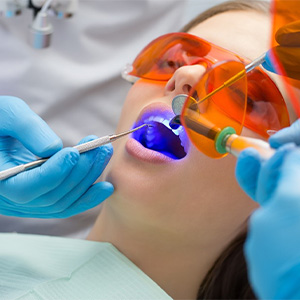
Knowing what to expect can help you feel more comfortable about your care.
Can I wait until my tooth hurts?
Ask your dentist about the right timing for your specific tooth. Untreated decay can progress. As a result, a tooth may need care before you feel pain.
Instead of using discomfort as your guide, ask what your dentist found and what waiting could mean. Then discuss whether treatment or a period of monitoring makes sense.
Your tooth’s condition should guide that decision. A clear explanation can help you choose your next step with confidence.
Questions about a recommended filling?
Whether you have questions about a recent exam or want us to check a tooth, we’re here to help. We’ll explain our findings and discuss your options.
We’re grateful for the trust you place in our team. Helping you understand your dental health is an important part of caring for your smile.
Advanced Dental Care
Jeremy Jorgenson, DDS
3033 Bristol St., Ste. 103
Costa Mesa, CA 92626
Learn more:
Tooth decay information from the National Institute of Dental and Craniofacial Research.