


Dental crowns in Costa Mesa have been used for generations because they are an effective method of restoring the health and function of a tooth. A crown is a versatile restoration that can be used along with other treatments, like root canal therapy. You don't have to worry about a dark crown being the focal point of your smile because Advanced Dental Care uses tooth-colored materials, so your restoration will blend in with your teeth.
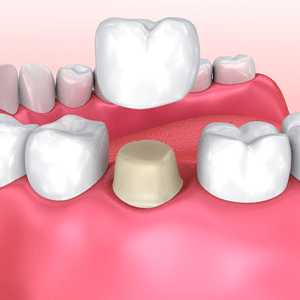
A dental crown is a customized cap that covers the entire surface of a tooth above the gum line. A crown can be recommended for many reasons, like protecting a weakened tooth from breaking. They are most often used in restorative dentistry to repair damaged teeth, like large areas of decay, breaks, or fractures. Crowns can also be used with other procedures, like after root canal therapy or to support a dental bridge. No matter the reason, they are designed to provide a long-term solution with an average life expectancy of 10 to 15 years.
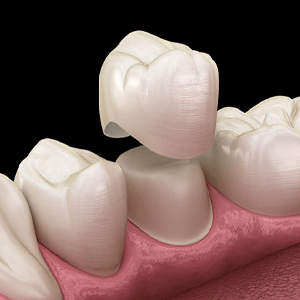
Your dentist at Advanced Dental Care will examine your mouth to create a personalized treatment plan. After any preparatory procedures, like treating decay, your tooth will be prepared for the restoration.
Your dentist in Costa Mesa may administer a local numbing agent to block any pain signals, but it isn't always necessary. They'll reshape your tooth before taking an impression of your mouth. It will be sent to the dental lab, where they will craft your crown to meet your specifications.
It can take the lab a couple of weeks, so your dentist will place a temporary restoration to protect your tooth while you wait. Once the lab has sent your crown back to our office, you will return to have the temporary one removed and your permanent crown bonded to your tooth.
You'll walk out of the office with a high-quality, natural-looking restoration that can last for a decade or longer with the right care, like brushing and flossing.
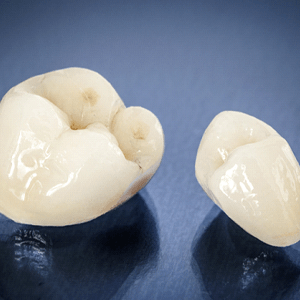
A single dental crown is among the most common restorative treatments, and for good reasons. Crowns offer many benefits, including:
If you need a dental crown, we can help. We offer the advanced solutions you need to achieve your best smile. If you have questions about dental crowns, or you're ready to schedule your consultation, contact our office today.

Dental crowns can help to build up and protect damaged teeth from enduring additional harm. Because every case is a little bit different, the cost of treatment can vary from patient to patient. During your consultation, we will go over the estimated cost of your treatment so that you don’t run into any surprises. Until then, here are some things for you to take into consideration.

There are various factors that contribute to the cost of dental crowns. Here are some of the most prominent ones.

Dental crowns are usually considered to be a major restorative treatment by dental insurance providers. This means that they are usually covered at about 50% after the annual deductible has been met and before the maximum has been exceeded. However, every plan is a little bit different, so it is best to reach out to your provider directly so that you don’t run into any surprises. If you have questions or concerns, talk to one of our friendly team members.

If you don’t have dental insurance, this doesn’t mean that you are completely out of luck. With a Be Smile Smart plan, you can save on many services completed at our practice, including dental crowns. We also accept payments through CareCredit and Sunbit. These third-party financing companies can split the cost of your treatment into manageable monthly installments with little to no interest. If you have any questions, don’t hesitate to contact us!
The actual dental crown is not permanent. It can last for a very long time with the right maintenance (sometimes even 15 years or more), but you will eventually need to replace it.
On the other hand, having a dental crown placed is considered an irreversible process. This is because enamel needs to be taken off the tooth in question in order to make room for the crown. Enamel lacks the means to regenerate itself, so if any is removed, it will be gone for good. This will leave the tooth in a state where it will always require a dental crown for protection.
It may be time to get a new dental crown if:
If you suspect that your dental crown is near the end of its lifespan, schedule an appointment with our team. We can take a look at your crown and determine whether a replacement is needed.
No matter how lifelike your dental crown is, it can never develop cavities. Of course, the tooth underneath the crown is a different story. Despite what you may think, teeth covered by crowns still have the same risk of suffering from decay as uncovered teeth. Harmful bacteria can slip underneath the restoration and attack the tooth.
The best way to minimize your risk for cavities is to brush and floss every day while also making time to visit your dentist for a checkup and cleaning every six months. When you brush around your dental crown, be sure to pay extra close attention to the area where the restoration meets the gums.
When our team prepares your tooth for a dental crown, we will use a local anesthetic to help keep your mouth numb; this will stop you from experiencing any discomfort. This step may not be necessary when the time comes to place the crown, but if you would like to be numbed anyway, be sure to let us know.
After your tooth has been prepared for a dental crown, it may be more sensitive than normal for a few days. Oftentimes, over-the-counter pain medication can help. Please let us know immediately if your discomfort gets worse instead of fading over time.
No, dental crowns don’t respond to professional whitening the same way natural teeth do. Unlike tooth enamel, the materials used to make dental crowns don’t contain pores, so the bleaching gel used for whitening can’t penetrate them. That said, if your dental crown becomes stained, you can simply have it replaced.